


Nano Rare Earth Material-Ytterbium Oxide
Release time:
2024-11-06
Ytterbium is one of the elements that are difficult to separate and purify in all rare earth elements. At present, liquid/liquid extraction and extraction chromatography are used to produce ytterbium oxide in industry, and the purity is generally 95% ~ 99.9. There is also the use of ytterbium valence properties to extract 99.9 ytterbium oxide.
Application background
Rare earth elements are high-yield elements in China, with reserves accounting for the world's total. Rare earth minerals and elements are all dominant. The application of rare earth elements is expanding day by day. Only in agriculture, China's application of rare earth crops, forage grass and forest seedlings has expanded to near species. The cumulative application area exceeds that of protection. The rare earth fertilizer entering the farmland ecosystem is calculated as rare earth nitrate. Although tens of millions of tons of grain, cotton, melons and fruits have been increased, with the continuous promotion of the application of rare earths in the biological field, especially the application of rare earth fertilizers and feed additives, the application amount is large and involves a wide range. In addition, the three wastes of the rare earth industry and the pollution of the surrounding environment caused by the development of rare earth resources in China have turned many rare earths that were in a stable state in the earth's crust into soluble state, which are easy to be biologically, and through a variety of ways into the human body. At present, people have carried out a lot of meaningful work on rare earth physiology, toxicology and other issues. The purity of rare earth compounds directly determines the special properties of the material, and rare earth materials with different cleanliness can be prepared with different performance requirements of ceramic materials, fluorescent materials, electronic materials and so on. At present, with the development of rare earth refining technology, clean rare earth compounds show a good market prospect, and the preparation of high-performance rare earth materials puts forward higher requirements for clean rare earth compounds.
ytterbium oxide
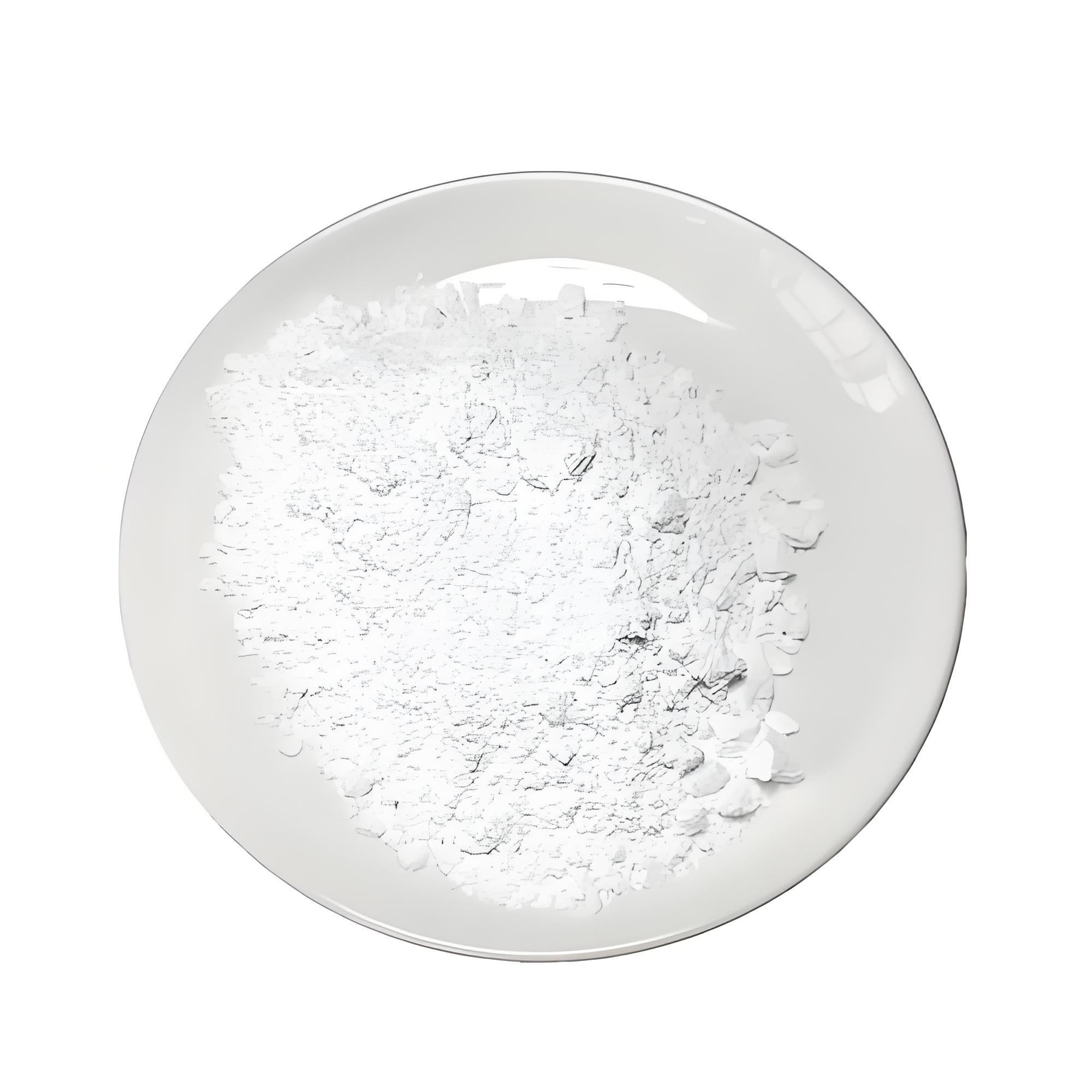
Ytterbium oxide (Ytterbium oxide)
CAS:1314-37-0
Molecular formula: Yb₂ OL3
Molecular weight: 394.10600
PSA:43.37000
LogP:43.37000
Melting point: 2346°C
Boiling Point:4070 ℃
Density:9.17 g/cm³
Status:The pure product is colorless powder, light brown or yellow when containing thulium oxide. Insoluble in water and cold acid, soluble in hot dilute acid. Slightly hygroscopic, easy to absorb water and carbon dioxide from the air, into basic ytterbium carbonate.The oxidation states are divalent and trivalent, and ytterbium can be slowly oxidized by air and water at room temperature.
Ytterbium is one of the elements that are difficult to separate and purify in all rare earth elements. At present, the industry uses more liquid/Production of ytterbium oxide by liquid extraction and extraction chromatography with a purity of generally95 %~99.9%. There are also the use of ytterbium variable valence properties to extract99.9 % Ytterbium oxide.
Advantage Features
Ytterbium oxide (Yb2O3) is an important rare earth oxide with a wide range of industrial applications. Its main role is reflected in the fields of optics, electronics and catalysis. In the field of optics, ytterbium oxide has excellent optical properties, especially in the infrared spectral range, and its high transparency and low absorption make it an important material for making infrared optical components. Ytterbium oxide-doped laser materials can be used to fabricate high-efficiency lasers, which have important applications in communications, medical, and industrial processing. In the field of electronics, ytterbium oxide is used to manufacture high-performance capacitors, transistors and other microelectronic devices. Its excellent dielectric properties and thermal stability make it occupy a place in electronic components. Ytterbium oxide also performs well in chemical reactions as a catalyst or catalyst support, which can significantly improve the reaction efficiency and selectivity, especially in some complex organic synthesis and environmental treatment processes.
ApplicationField:
Special alloys: used in the manufacture of special alloys, dielectric ceramics and special glass.
Optical materials: used in the manufacture of optical glass additives, fluorescent powder and magnetic bubble materials in the electronics industry, so that the magnetic bubble storage device has the characteristics of high speed, large capacity, small volume, multi-function and so on.
High-temperature structural materials: used to prepare fused silica ceramic materials containing nanoscale ytterbium oxide. This material has the characteristics of low thermal expansion rate and high safety and reliability. It is suitable for glass melting, steel and non-ferrous metal metallurgy, electronics, Military missiles, spacecraft and other fields.
Fluorescent material: preparation of holmium doped ytterbium oxide phosphor, this phosphor has the advantages of simple synthesis, stable performance.
Piezoelectric materials: used to prepare ytterbium oxide-doped low-temperature sintered high-voltage piezoelectric PZT-based ceramic materials, which are sintered at low temperatures of 850~950°C and have excellent piezoelectric properties.
In summary, ytterbium oxide has a wide range of applications in the fields of special alloys, optical materials, high-temperature structural materials, fluorescent materials and piezoelectric materials.
Synthesis method:
The main raw material of ytterbium oxide is rare earth elements containing ytterbium. Specifically, ytterbium oxide can be prepared by the following methods:
1. Decomposition by extraction methodbrown yttrium niobium oreThe resulting mixed rare earth contains Y2O350% and CeO2 about 4%, in additionCeriumAfter feeding rare earth nitrate solution, yttrium-rich rare earth is extracted and grouped by N263-LiNO3 system. After acid dissolution, yttrium is extracted and purified by N263-heavy solvent-NH4SCN system. The raffinate is yttrium-rich rare earth. Thulium, ytterbium and lutetium heavy rare earth enter the organic phase. Thulium and lutetium are grouped by N263-heavy solvent extraction, ytterbium oxide was prepared by oxalic acid precipitation separation, filtration and burning.
2, with rare earth enrichment containing ytterbium as raw material, usingsolvent extraction method,ion exchange methodor reduction method to separate Yb3 from other rare earth ions. Ytterbium is then used with an appropriate precipitanthydroxideCarbonate, oxalate form precipitation. Ytterbium oxide is obtained by burning its hydroxide, carbonate or oxalate.
In addition, the preparation process of ytterbium oxide also includes adjusting the pH value of the ytterbium salt solution by using ammonia water, adding saturated oxalic acid or ammonium oxalate solution, heating, filtering, calcining and other steps, or calcining the hydroxide (or carbonate) of ytterbium in air at 900°C.
Production process
A method of extraction and purification of ytterbium oxide, including the following steps:
1. Configuration of liquid to be purified: configuration of mixed solution of ytterbium oxide to be purified;
2. Intermediate agent configuration: delay agent and eluent are configured. The delay agent is Cu(NO3)2 · 3H2O, water and nitric acid, and the eluent is configured by solid EDTA acid, water and ammonia water;
3. Separation column preparation: the separation column is used as a carrier for ion exchange;
4, leaching column transformation: the separation column with step 2 in the delay agent transformation;
5, adsorption operation: step 1 configuration of the mixed solution and separation column adsorption operation;
6, washing operation: through the washing agent to the separation column in step 5 for washing operation;
7, step 6 by the rinse after the collection of liquid in batches by volume collection, and sampling analysis of purity, centralized precipitation and collection;
8. Waste liquid treatment.
Precautions for production process:
Extraction and purification method: The extraction and purification process of ytterbium oxide includes the steps of configuring the liquid to be purified, configuring the retardant and eluent, and preparing the separation column. The specific method includes configuring a mixed solution of ytterbium oxide to be purified, performing ion exchange using a retardant and an eluent, and finally obtaining high-purity ytterbium oxide.
Production process: Industry uses liquid/liquid extraction and extraction chromatography to produce ytterbium oxide, with a purity of 95% to 99.9. In addition, 99.9% of ytterbium oxide can be extracted by ytterbium valence, or high purity ytterbium oxide can be prepared by pressurized ion exchange.
Equipment selection: In the production process, it is necessary to select the appropriate equipment for ion exchange and purification. As the carrier of ion exchange, the selection and use of separation column is very important to the purification effect.
Environmental impact: The production and use of rare earth elements have a certain impact on the environment. The application and promotion of rare earth elements in the biological field, especially the application of rare earth fertilizers and feed additives, has increased the pollution to the environment. Therefore, it is necessary to take measures to reduce environmental pollution in the production process.
Safety measures: In the production process, it is necessary to strictly abide by the safety production regulations, establish safety risk control and accident hidden danger investigation and management mechanism to ensure the safety of operators.
Through the above points, the smooth production of ytterbium oxide can be effectively guaranteed and the impact on the environment can be reduced.
Transportation Precautions:
Packaging requirements: Ytterbium oxide powder is dangerous goods, and sealed packaging is required during transportation to prevent moisture or leakage during transportation. Commonly used packaging materials are moisture-proof paper, plastic bags and sealed barrels.
Environmental control: Avoid violent vibration and squeezing during transportation to prevent packaging damage and product scattering. Especially in long-distance transportation, especially in cross-border transportation, relevant customs clearance procedures and dangerous goods transportation permits are required to ensure compliance with the laws and regulations of the destination country and region.
Temperature control: Ytterbium oxide may thermally decompose or react with other substances at high temperatures, so it is necessary to control the operating temperature and reaction conditions. During transportation, when the ambient temperature exceeds the control temperature, corresponding remedial measures shall be taken; when the ambient temperature exceeds the emergency temperature, relevant emergency procedures shall be initiated.
Safety measures: during loading and unloading, no friction, vibration, falling, dragging, rolling, impact, to prevent packaging and container damage. During operation, it is not allowed to trample or crush the spilled materials, and it is forbidden to use metal and combustible materials to treat the spilled materials..
Storage conditions: Ytterbium oxide should be stored in a dry, cool and well-ventilated place, avoid direct sunlight and humid environment to prevent chemical reaction or deterioration.
Through the above measures, the safety and stability of ytterbium oxide during transportation can be effectively ensured.
Key words:
Recommend News


Contact E-mail
Service Hotline
+86 15931391033
Company Address
1803, Block C, Wanda Plaza Office Building, Yuhua District, Shijiazhuang City, Hebei Province